
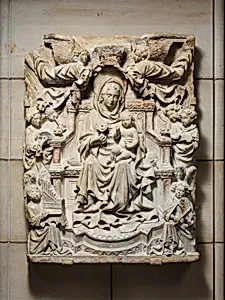
Relief with Enthroned Virgin and Child surrounded by Angels
Unknown Artist
ca. 1425–40
Medium
Limestone (Wackestone from Veneto or Friuli), traces of polychromy
Dimensions
32 1/4 × 23 3/4 × 5 7/8 in., 200 lb. (81.9 × 60.3 × 14.9 cm, 90.7 kg)
Classification
Sculpture-Stone
Culture
North Italian
Department
Medieval Art
Museum
Metropolitan Museum of Art, New York, NY
Credit
Bequest of Irwin Untermyer, 1973
Accession Number
1974.126.4
Rights
Public Domain
Tags
Art Historical Context
This exquisite limestone relief, created by an unknown North Italian artist around 1425–40, captures a timeless devotional scene: the Virgin Mary enthroned with the Christ Child, gently encircled by adoring angels. Hailing from the Veneto or Friuli regions, it the late Gothic style prevalent in northern Italy during this transitional period toward the Renaissance, where religious imagery emphasized tenderness and hierarchy in sacred narratives. Such reliefs adorned altarpieces, chapels, or private devotions, inviting worshippers to contemplate the divine motherhood central to Christian theology. Carved from wackestone—a fine-grained limestone quarried locally—the sculpture showcases masterful low-relief techniques that create depth and movement with subtle undercutting, particularly in the angels' flowing drapery and wings. Traces of original polychromy hint at its once-vibrant colors, a common medieval practice to heighten emotional impact and realism, transforming stark stone into a lifelike vision of heaven. Weighing 200 pounds, its monumental yet intimate scale (32¼ × 23¾ inches) underscores its role in both ecclesiastical and domestic settings. Now in the Metropolitan Museum of Art's Medieval Art collection, thanks to the 1973 bequest of Irwin Untermyer, this work offers a window into North Italian piety and craftsmanship, evoking the spiritual fervor of its era.