
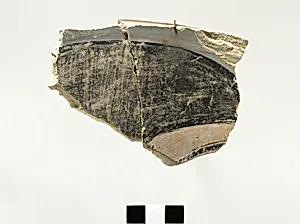
Reliefs from the tomb of Meketre
Unknown Artist
ca. 1981–1975 B.C.
Medium
Limestone, paint
Dimensions
H. 7.7 cm (3 1/16 in.); W. 10.5 cm (4 3/16 in.); D. 2.1 cm (13/16 in.)
Classification
Relief, tomb of Meketre
Period
Middle Kingdom
Department
Egyptian Art
Museum
Metropolitan Museum of Art, New York, NY
Credit
Rogers Fund, 1931
Accession Number
31.3.170a
Rights
Public Domain
Art Historical Context
These delicate limestone reliefs, painted in vibrant hues, hail from the tomb of Mre, a powerful treasurer and overseer of the double granary under pharaohs Mentuhotep II andusret I during Egypt's Middle Kingdom (Dyn 12, ca. 1981–1975 B.C.). Discovered near modern-day Luxor, they offer a glimpse into the elite's afterlife preparations, where such carvings magically sustained the deceased with scenes of offerings, daily labors, or processions—ensuring eternal prosperity amid the Nile's rhythms. Crafted from fine limestone and adorned with mineral-based paints that have retained their jewel-like colors, these miniature panels (just 7.7 cm high) exemplify Middle Kingdom artistry. The technique of sunk relief, with figures in profile and hierarchical proportions, reflects a refined naturalism emerging after the Old Kingdom's rigidity, blending precision with subtle vitality. Their small scale suggests they were architectural fragments or models, underscoring the period's innovative tomb designs. Housed in the Metropolitan Museum of Art thanks to the Rogers Fund of 1931, these reliefs illuminate a golden age of stability and cultural revival, inviting us to ponder ancient Egyptian beliefs in immortality through everyday rituals preserved in stone.