
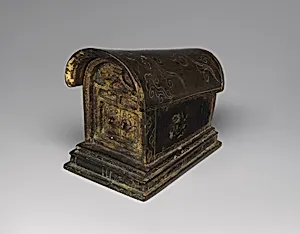
唐 鎏金銅舍利棺|Reliquary in the shape of a coffin
Unknown Artist
8th century
Medium
Gilt bronze
Dimensions
H. 3 1/2 in. (8.9 cm); W. 2 1/2 in. (6.4 cm); D. 4 in. (10.2 cm)
Classification
Metalwork
Culture & Period
China · Tang dynasty (618–907)
Department
Asian Art
Museum
Metropolitan Museum of Art, New York, NY
Credit
Rogers Fund, 1922
Accession Number
22.12a, b
Rights
Public Domain
Tags
Art Historical Context
Nestled in the Metropolitan Museum of Art's Asian Art collection, this exquisite bronze reliquary from China's Tang dynasty (618–), dating to the 8th century takes the form of a miniature coffin. Measuring just 3½ inches high, 2½ inches wide, and 4 inches, it was crafted to house sacred Buddhist relics, known as *sarira*—often pearl-like beads or ashes of enlightened beings. The coffin shape poignantly evokes the human body as a temporary vessel, mirroring Buddhist teachings on impermanence and the cycle of life and death. The Tang era marked a golden age of cosmopolitanism and religious flourishing in China, with Buddhism deeply integrated into court and popular culture. Reliquaries like this one were enshrined in pagodas or temples, serving as focal points for devotion and pilgrimage. Its small scale suggests it may have held precious fragments within a larger stupa, underscoring the era's reverence for the spiritual over the material. Artistically, the use of gilt bronze exemplifies Tang metalwork mastery: bronze was cast with intricate precision, then lavishly gilded—likely through a mercury-gold amalgam fired to a shine—for an opulent, golden glow symbolizing enlightenment. Acquired through the Rogers Fund in 1922, this rare survivor invites us to ponder the artistry and faith of a dynasty that bridged East and West.