
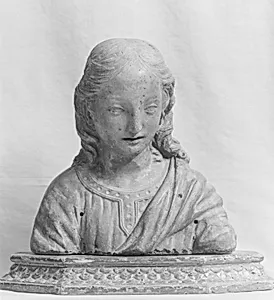
Renaissance-style bust of the boy Christ
Unknown Artist
probably 19th century
Medium
Stucco, remains of polychromy; base: carved and gilt wood
Dimensions
H. 13-3/8 in. (34 cm.)
Classification
Sculpture
Culture
Italian, Florence
Department
European Sculpture and Decorative Arts
Museum
Metropolitan Museum of Art, New York, NY
Credit
Rogers Fund, 1913
Accession Number
13.157.1a, b
Rights
Public Domain
Tags
Art Historical Context
This delicate Renaissance-style bust depicts the boy Christ, capturing the tender innocence of the child savior with soft, rounded features and a serene gaze. Crafted in Florence, Italy—cradle of the Renaissance—the emulates the refined naturalism of 15th- and 16th-century like Donatello or Desiderio da Settignano, though it dates to the 19th century. Likely produced during the Neo-Renaissance revival, it a nostalgic admiration for Italy's artistic golden age amid growing interest in historicism among collectors. Fashioned from stucco, a versatile plaster medium favored for its moldability and affordability, the bust retains traces of original polychromy—vibrant paints that once brought the figure vividly to life, enhancing its devotional appeal. The carved and gilt wood base adds a touch of opulence, elevating it from humble piety to elegant display piece. Standing just 13⅜ inches tall, it would have suited private chapels or scholarly cabinets. Acquired through the Rogers Fund in 1913, this work now graces the Metropolitan Museum of Art's European Sculpture and Decorative Arts collection. It embodies Florence's enduring cultural legacy, bridging Renaissance spirituality with 19th-century tastes, inviting visitors to ponder the timeless portrayal of divine youth.