
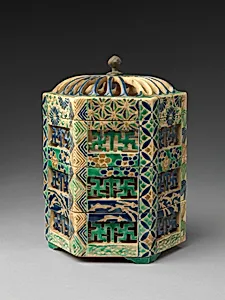
色絵松葉梅菊文透彫重箱|Reticulated Tiered Box with Pine Needles, Plum Blossoms, and Chrysanthemums
Unknown Artist
second half of the18th century
Medium
Stoneware with polychrome enamels over a transparent glaze (Kyoto ware, Ko-Kiyomizu type)
Dimensions
W. 5 in. (12.7 cm)
Classification
Ceramics
Culture & Period
Japan · Edo period (1615–1868)
Department
Asian Art
Museum
Metropolitan Museum of Art, New York, NY
Credit
Gift of Florence and Herbert Irving, 2015
Accession Number
2015.500.9.30a–d
Rights
Public Domain
Tags
Art Historical Context
This exquisite reticulated tiered box, crafted in the second half of the 18th century during Japan's Edo period (1615–1868), exemplifies the refined artistry of Kyoto ware, specifically the Ko-Kiyomizu type. Made of stoneware adorned with vibrant polychrome enamels over a transparent glaze, the box measures just 5 inches wide, yet its delicate openwork (reticulated) design allows light to dance through intricate motifs of pine needles, plum blossoms, and chrysanthemums. These stacked tiers, known as *juubako*, were prized for storing sweets or tea ceremony essentials, blending utility with breathtaking beauty. Ko-Kiyomizu ware, an early precursor to the famous Kiyomizu-yaki tradition, emerged in Kyoto around the late 17th century, drawing on Chinese porcelain influences while showcasing Japanese innovation. Artisans fired the stoneware at high temperatures, then applied colorful enamels that vitrified under a clear overglaze, creating a luminous, jewel-like effect. The floral symbols carry deep cultural resonance: pine for longevity and resilience, plum blossoms for perseverance in winter, and chrysanthemums as emblems of the imperial family and autumn's fleeting glory. Housed in the Metropolitan Museum of Art's Asian Art Department as a gift from Florence and Herbert Irving in 2015, this anonymous masterpiece reflects Edo Japan's prosperous merchant culture, where such luxurious ceramics elevated everyday rituals into art. Visitors, imagine the soft glow of candlelight revealing its hidden patterns—a testament to the era's harmonious blend of nature, craft, and elegance.