
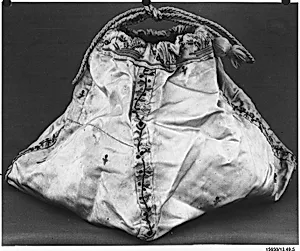
Reticule
Unknown Artist
late 18th century
Medium
Satin
Dimensions
H. 8 x W. 10 inches (20.3 x 25.4 cm)
Classification
Textiles-Embroidered
Culture
British
Department
European Sculpture and Decorative Arts
Museum
Metropolitan Museum of Art, New York, NY
Credit
Gift of Mrs. F. D. Millet, 1913
Accession Number
13.49.5
Rights
Public Domain
Art Historical Context
Step into the elegant world of late 18-century British fashion with this charming *Reticule*, a small drawstring handbag crafted from luxurious satin. Measuring just 8 by 10 inches, this embroidered textile accessory was an essential carryall for women, replacing deep pockets in the slender neoclassical gowns of the. Donated to the Metropolitan Museum of Art 1913 by Mrs. F. D. Millet, it exemplifies the refined decorative arts of Europe's textile tradition. Produced by an unknown artist in Britain during the late 1700s, the reticule highlights the period's shift toward lighter, Empire-style silhouettes inspired by ancient Greek and Roman aesthetics. Satin, with its smooth sheen and durability, was a prized material for such intimate accessories, often adorned with intricate embroidery to showcase needlework skills. These handcrafted details—meticulous stitches forming patterns or motifs—reflected both personal expression and social status, as women of means commissioned or created them to complement their wardrobes. As a survivor from this transformative time, the reticule offers a tactile glimpse into daily life, blending utility with artistry. Housed in the Met's Department of European Sculpture and Decorative Arts, it invites us to appreciate the unsung craftsmanship that defined Georgian-era femininity.