
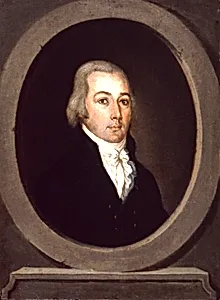
Retrato de caballero
ca. 1805-1809
Medium
Painting
Classification
Painting
Department
Smithsonian Collection
Museum
Smithsonian American Art Museum
Credit
Smithsonian American Art Museum, Teodoro Vidal Collection
Accession Number
1996.91.3
Rights
Public Domain
Tags
About this artwork
José Campeche's paintings usually have a highly finished, almost glassy surface, but this portrait retains the visible brushstrokes used to model the sitters features. Despite his African ancestry, Campeche did not often paint African subjects. Most of his sitters, including this horseman, were fair-skinned Europeans. (Andrew Connors, José Campeche's San Juan Nepomuceno, American Art, Summer 1997)
Art Historical Context
José Campeche y Jordán's *Retrato de caballero* (Portrait of a Gentleman), created around 1805-1809, captures a fair-skinned European horseman in a striking waist-length composition. As one of Puerto Rico's earliest and most accomplished painters, Campeche—himself of African descent—worked in the late colonial era, crafting portraits for the island's elite in San Juan. This oil painting, now in the Smithsonian American Art Museum's Teodoro Vidal Collection, reflects the rigid social hierarchies of Spanish colonial society, where European sitters dominated the canvases of even non-European artists like Campeche. Unlike Campeche's typical works, known for their highly polished, almost glassy finish, this portrait boldly retains visible brushstrokes that model the sitter's features with dynamic texture and depth. This departure adds a sense of immediacy and realism, inviting viewers to appreciate the artist's masterful handling of light and form. Though Campeche rarely depicted subjects of African heritage, his skill in elevating local patrons bridged European portrait traditions with Puerto Rican identity. A testament to early Latin American artistry, this piece highlights Campeche's versatility and the cultural complexities of colonial portraiture, making it a gem for exploring 19th-century transatlantic influences. (198 words)