
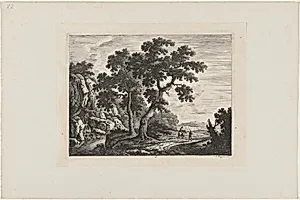
Rider on a Path by a Waterfall
Medium
etching on laid paper
Dimensions
plate: 20.2 x 27 cm (7 15/16 x 10 5/8 in.) sheet: 23 x 30.2 cm (9 1/16 x 11 7/8 in.)
Classification
Department
CG-E
Museum
National Gallery of Art, Washington, D.C.
Credit
Ailsa Mellon Bruce Fund
Accession Number
2009.102.15
Rights
Public Domain
Art Historical Context
Johann Christoph Dietzsch *Rider on a Path a Waterfall* (1734) is a captivating etching that captures the sublime beauty of nature in the early 18th century. during the Baroque era's transition toward Rococo sensibilities in Germany, this print depicts a lone rider traversing a winding path beside a dramatic cascade, evoking a sense of and the awe-inspiring power of the landscape. Dietzsch, a Nuremberg-based engraver known for his intricate landscapes and architectural scenes, drew from Dutch printmaking traditions, blending meticulous detail with atmospheric depth to transport viewers into a serene yet dynamic wilderness. The medium—etching on laid paper—highlights the technical prowess of 18th-century printmaking. Etching allowed artists like Dietzsch to achieve fluid lines and tonal gradations through acid-etched copper plates, making complex scenes like cascading water and rugged terrain reproducible and affordable for collectors across Europe. Measuring a modest plate size of 20.2 x 27 cm, this intimate work exemplifies how prints democratized art, bridging elite patronage with broader audiences. Acquired through the Ailsa Mellon Bruce Fund and housed in the National Gallery of Art's Prints department (CG-E), this piece offers a window into the era's fascination with nature's grandeur. Visitors will appreciate its delicate textures on the laid paper, a hallmark of handmade quality, inviting closer inspection of Dietzsch's masterful balance of light, shadow, and motion.
About the Artist
Johann Christoph Dietzsch · 1710–1768
Comment on works: Landscapes; Flowers; Fruit; Still life; Fruit; Kitchen pieces