
Rien de trop (Nothing in Excess)
published 1756
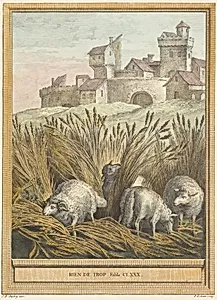
Medium
hand-colored etching
Classification
Department
CG-E
Museum
National Gallery of Art, Washington, D.C.
Credit
Gift of Mr. and Mrs. George W. Ware
Accession Number
1975.81.24
Rights
Public Domain
Art Historical Context
Welcome to the National Gallery of, where *Rien de trop ( in Excess)*, a hand-colored etching published in 1756, invites reflection on timeless wisdom. Created by engraver Pierre Etienne Moitte a design by the celebrated French Rococo artist Jean-Baptiste Oudry (6–1755), this print captures the elegance of 18th-century French decorative arts. Oudry, renowned for his lively animal scenes and illustrations for La Fontaine's fables, often infused moral lessons with Rococo charm—playful yet refined, blending naturalism with whimsy. The title draws from the ancient Greek Delphic maxim "Nothing in excess," popularized in classical philosophy and echoed in Enlightenment-era art, urging balance in life. As a hand-colored etching, the work showcases meticulous printmaking techniques: Moitte's precise etching on copper plate allowed detailed reproduction of Oudry's original composition, while artisanal coloring by hand brought vibrant hues to life, making affordable luxury accessible to collectors. This medium bridged painting and popular dissemination, reflecting the era's booming print market. Generously gifted by Mr. and Mrs. George W. Ware, this piece from the CG-E department exemplifies how prints preserved Oudry's legacy, influencing European taste in moralistic yet delightful imagery. Pause here to ponder: in our modern excess, what might this elegant admonition still teach us?