
Rijst plantend meisje
Kitagawa Utamaro, 1800 - 1825
About this artwork
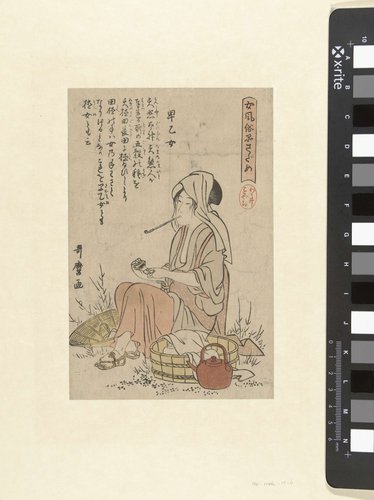
**Rijst Plantend Meisje (Rice-Planting Girl)** *Kitagawa Utamaro, ca. 1800–1825, color woodcut, 189 × 125 mm* Kitagawa Utamaro (3–1806), a master of ukiyo-e—the "pictures of the floating world" from Japan's Edo period—captures everyday beauty in this intimate color woodcut. Renowned for his bijin-ga (images of beautiful women), Utamaro elevates ordinary figures with graceful lines and vibrant hues, printed via the collaborative woodblock process where artisans carved blocks for each color layer. This small-scale print, typical of mass-produced ukiyo-e affordable to urban merchants, reflects the genre's peak in the late 18th and early 19th centuries. The scene depicts a young woman seated amid lush rice plants, pipe in mouth, wearing a wide hat for sun protection, with a kettle and cloth-filled tub nearby—hallmarks of rural labor during Japan's vital rice-planting season. Utamaro infuses her poised figure with sensuality and quiet dignity, blending genre realism with idealized femininity. Rice farming was the backbone of Edo society's economy, sustaining a population boom, and such prints romanticized peasant life for city dwellers. This work showcases Utamaro's innovative techniques, like subtle gradations (bokashi) for depth and metallic pigments for sheen, making it a cultural snapshot of labor, leisure, and beauty in pre-industrial Japan. A charming window into the "floating world"! (198 words)