
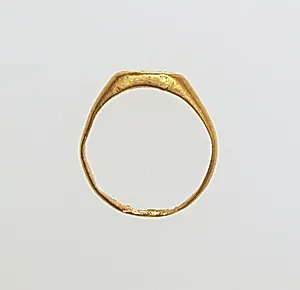
Ring
Unknown Artist
1st century BCE–3rd century CE
Medium
gold
Dimensions
Other: 5/8 x 3/16 x 9/16 in. (1.6 x 0.4 x 1.5 cm)
Classification
Gems
Culture
Roman
Department
Greek and Roman Art
Museum
Metropolitan Museum of Art, New York, NY
Credit
Purchase by subscription, 1895
Accession Number
95.15.128
Rights
Public Domain
Art Historical Context
This exquisite gold ring, crafted by an unknown Roman artisan between the 1st century BCE and rd century CE, offers a glimpse into the refined world of ancient Roman jewelry. Classified among the Metropolitan Museum of Art's gems in the Greek and Roman Art, it measures a modest 5/8 x 3/16 x 9/16 inches, perfectly suited for a finger. Acquired through a public subscription purchase in 1895, it reflects early collector enthusiasm for classical antiquities. In Roman society, rings like this were more than adornments—they symbolized status, authority, and personal identity. Often used as signet rings, they bore engraved gems (intaglios) for sealing documents with wax, blending practicality with artistry. Gold, a precious metal associated with wealth and divinity, was hammered, soldered, and possibly embellished with intricate techniques, showcasing the era's metallurgical prowess during the late Republic through the height of the Empire. Though details of its exact design remain subtle in scale, this ring embodies the cultural elegance of Roman daily life, where even small objects carried profound social weight. Visitors, pause to admire its timeless sparkle—a tiny testament to an empire's enduring legacy.