
Ring
Unknown Artist
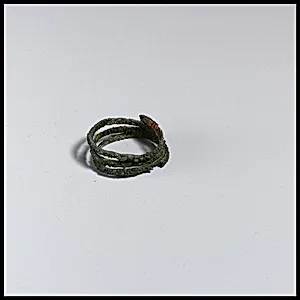
Medium
Bronze
Dimensions
diameter 2.39 cm.
Classification
Bronzes
Department
Greek and Roman Art
Museum
Metropolitan Museum of Art, New York, NY
Credit
Museum Accession
Accession Number
X.21.149
Rights
Public Domain
Art Historical Context
This delicate bronze ring, measuring just 2.39 cm in diameter, hails from the ancient Greek or Roman world, as evidenced by its placement in the Metropolitan Museum Art's Greek and Roman Art department. Crafted in bronze—a favored medium for its durability and malleability—the ring exemplifies the everyday jewelry that adorned fingers across the Mediterranean from antiquity. Though the artist and exact date remain unknown, such small bronzes were often produced through lost-wax casting, a sophisticated technique that allowed for intricate details even on miniature scales. In ancient Greek and Roman societies, rings like this served practical and symbolic purposes: as personal seals for wax impressions on documents, status symbols, or simple ornaments. Bronze examples survive remarkably well due to the metal's resistance to corrosion, offering us rare glimpses into daily life, trade, and craftsmanship over 2,000 years ago. This unassuming piece highlights how even tiny artifacts can reveal the ingenuity of classical civilizations. Visitors, pause to appreciate its intimate scale—imagine slipping it onto a finger in a bustling agora or Roman forum. It's a testament to the Met's vast collection of bronzes, bridging the gap between ancient wearers and modern admirers.