
Ring, scarab
Unknown Artist
ca. 1550–1295 B.C.
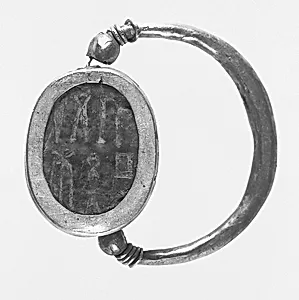
Medium
Gold, lapis lazuli
Classification
Ring, scarab
Period
New Kingdom
Department
Egyptian Art
Museum
Metropolitan Museum of Art, New York, NY
Credit
Theodore M. Davis Collection, Bequest of Theodore M. Davis, 1915
Accession Number
30.8.416
Rights
Public Domain
Tags
Art Historical Context
This exquisite scarab ring, dating to Egypt's New Kingdom (ca 1550–1295 B.C.) during the illustrious Dynasty 18, showcases the period's unparalleled goldsmithing. Crafted from gleaming gold and vibrant lapis lazuli—a rare, deep-blue stone imported from distant Afghanistan—the ring blends luxury with symbolism. Dynasty 18, home to iconic rulers like Hatshepsut and Tutankham, marked a golden age of artistic innovation and imperial wealth, where such jewelry adorned the elite. Scarabs, shaped like the sacred dung beetle, embodied rebirth and the rising sun god Khepri, making them potent amulets for protection and good fortune. Worn as rings, they doubled as personal seals for documents, their engraved bases often bearing spells or royal names. The meticulous inlay of lapis lazuli into gold highlights advanced techniques like granulation and cloisonné, reflecting Egypt's reverence for materials evoking eternity and the divine. A gem from the Theodore M. Davis Collection, bequeathed to the Metropolitan Museum of Art in 1915, this piece invites us to ponder the daily magic woven into ancient lives.