
Ritual Ewer
Unknown Artist
Dated by inscription 1733
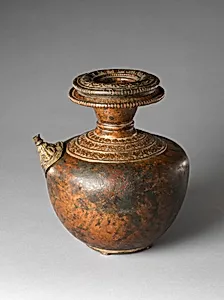
Medium
Copper alloy
Dimensions
H. 9 7/16 in. (24 cm); W. to spout 8 7/16 in. (21.5 cm); Diam. of collar 5 1/8 in. (13 cm)
Classification
Sculpture
Culture
Nepal, Bhaktapur
Department
Asian Art
Museum
Metropolitan Museum of Art, New York, NY
Credit
Zimmerman Family Collection, Gift of the Zimmerman Family, 2020
Accession Number
2020.288.4
Rights
Public Domain
Art Historical Context
This elegant **Ritual Ewer**, by inscription to 1733, hails from Bhaktapur a historic Newar city in Nepal renowned for its masterful metalwork. Standing just over 9 inches tall with a wide collar and gracefully curving spout, this copper vessel measures about 8.5 inches across. Crafted as a functional sculpture, it exemplifies the refined artistry of anonymous Nepalese artisans who blended utility with spiritual symbolism in the Asian Art tradition. In Nepalese culture, ewers like this were indispensable for Hindu and Buddhist rituals used to pour holy water (jal) during puja ceremonies, initiations, or offerings to deities. The choice of copper alloy—likely a bronze or brass mix—ensured durability for repeated sacred use while symbolizing purity and conductivity for ritual energies. Techniques such as casting and chasing would have allowed intricate detailing, though the object's smooth, elegant form highlights Bhaktapur's 18th-century emphasis on harmonious proportions over ornate excess. A gift from the Zimmerman Family Collection to the Metropolitan Museum of Art in 2020, this ewer offers a tangible link to Nepal's living heritage. Visitors, imagine the rhythmic pour of water in a temple rite—its quiet presence evokes the devotion and skill of artisans past.