
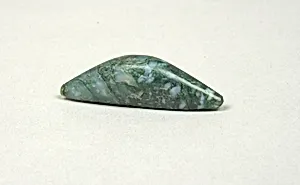
Ritual Stone (pulidor)
Unknown Artist
15th–early 16th century
Medium
Greenstone
Dimensions
Height 1 in.
Classification
Stone-Implements
Culture
Aztec (?)
Department
Arts of Africa, Oceania, and the Americas
Museum
Metropolitan Museum of Art, New York, NY
Credit
Gift of Arthur M. Bullowa, 1989
Accession Number
1989.314.7
Rights
Public Domain
Art Historical Context
This petite Ritual Stone, known as a *pulidor* or polisher, hails from the 15th to early 16th century a vibrant era in Mesoamerican history coinciding with the height of the Aztec Empire. Crafted from lustrous greenstone—a prized hardstone often linked to jadeite—this 1-inch-tall implement exemplifies the Aztecs' (or a closely related culture's) mastery of stoneworking. Donated to the Metropolitan Museum of Art 1989 by Arthur. Bullowa, it in the Arts of Africa Oceania, and the Americas department, classified among functional yet sacred stone tools. Greenstone held profound symbolic value in Aztec society, evoking water, fertility, and divine power, reserved for elite artisans and rituals. The *pulidor*'s smooth, ergonomic form suggests it was used to burnish precious metals like gold or polish ceramics and jade, blending utility with ceremony. Such tools often featured in temple offerings or craft workshops, bridging everyday labor and spiritual practice. Though small, this artifact whispers of Aztec ingenuity: precise carving from unyielding stone without metal tools, revealing a culture where even implements embodied cosmic order. Visitors, imagine its cool touch in a priest's hand during a sacred rite— a tangible link to Tenochtitlan's lost world.