
东周 青銅鼎|Ritual Tripod Cauldron with Cover (Ding)
Unknown Artist
5th–4th century BCE
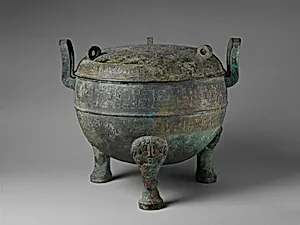
Medium
Bronze
Dimensions
H. (at handles) 16 7/8 in. (42.9 cm); W. (at handles) 19 3/4 in. (50.2 cm); Diam. 16 5/8 in. (42.2 cm)
Classification
Metalwork
Culture & Period
China · Eastern Zhou dynasty (770–256 B.C.)
Department
Asian Art
Museum
Metropolitan Museum of Art, New York, NY
Credit
Charlotte C. and John C. Weber Collection, Gift of Charlotte C. and John C. Weber through the Live Oak Foundation, 1988
Accession Number
1988.20.6a, b
Rights
Public Domain
Art Historical Context
This exquisite bronze ritual tripod cauldron or *ding*, hails from China's Eastern Zhou dynasty (770256 BCE), dated to the 5th–4th century BCE. Standing16⅞ inches tall at the handles with a diameter of 16⅝ inches, it exemplifies the masterful metalwork of the period, produced by an unknown artisan. its sturdy tripod legs, flared body, and fitted cover the vessel was designed for ceremonial use, evoking the grandeur of ancient elite society. In ancient China, *ding* cauldrons held profound cultural and ritual significance, often used to cook sacrificial offerings during ancestral worship or placed in tombs as symbols of power and legitimacy. During the Eastern Zhou era—a time of warring states and philosophical flourishing—these bronzes grew more refined, showcasing advanced lost-wax or sectional-mold casting techniques that allowed for intricate designs and durable forms. This example reflects the era's artistic evolution, blending functionality with symbolic prestige. Today, housed in the Metropolitan Museum of Art's Asian Art Department as a gift from the Charlotte C. and John C. Weber Collection, it invites visitors to ponder the rituals of a bygone dynasty, where metalwork bridged the earthly and spiritual realms.