
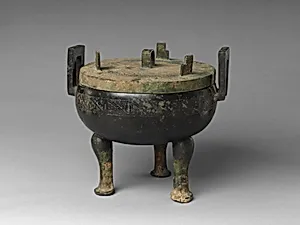
东周 青銅鼎|Ritual Tripod Cauldron with Cover (Ding)
Unknown Artist
7th–6th century BCE
Medium
Bronze
Dimensions
H. (at handles) 11 3/8 in. (28.9 cm); Diam. 10 1/4 in. (26 cm)
Classification
Metalwork
Culture & Period
China · Eastern Zhou dynasty (770–256 B.C.)
Department
Asian Art
Museum
Metropolitan Museum of Art, New York, NY
Credit
John Stewart Kennedy Fund, 1913
Accession Number
13.220.40a, b
Rights
Public Domain
Art Historical Context
Step into the world of ancient China with this elegant Ritual Tripod Cauldron with Cover (Ding), a masterpiece from the Eastern Zhou dynasty (770–256 BCE), dating to the 7th–6th century BCE. at 11 3/8 inches high (at handles) with a 10 1/4-inch diameter, this compact vessel exemplifies the refined metalwork of its era. Crafted by an unknown artist, it belongs to the Metropolitan Museum of Art's Asian Department, acquired through the John Stewart Kennedy Fund in 1913. Dings like this were far more than cooking pots; they were sacred ritual vessels used in ancestor worship and sacrificial ceremonies, symbolizing power, legitimacy, and familial piety. During the Eastern Zhou period—a time of political fragmentation into rival states—such bronzes became status symbols for the elite, often inscribed with clan names or historical claims. This tripod form, with its three sturdy legs and fitted lid, allowed stable placement over fire for offerings, embodying the harmony of heaven, earth, and humanity in Zhou cosmology. Bronze casting reached extraordinary heights in this dynasty, employing sophisticated piece-mold techniques to create smooth surfaces and intricate motifs. Though details of decoration aren't specified here, the vessel's survival highlights the enduring cultural reverence for these artifacts, bridging us to rituals that shaped Chinese civilization for millennia. A true treasure for pondering ancient devotion!