
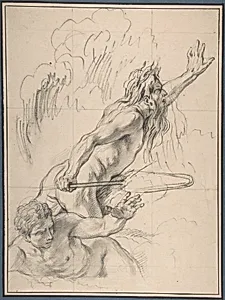
River God and Another Male Figure
18th century
Medium
Black chalk (stumped) with touches of red chalk, heightened with white; squared in black chalk, framing lines in pen and brown ink
Dimensions
14 7/16 x 10 11/16 in. (36.7 x 27.1 cm)
Classification
Drawings
Department
Drawings and Prints
Museum
Metropolitan Museum of Art, New York, NY
Credit
Fletcher Fund, 1972
Accession Number
1972.224.2
Rights
Public Domain
Tags
Art Historical Context
In the opulent world of 18th-century Rococo art, Charles Antoine Coypel (1694–1752), a leading history painter and son of the renowned Antoine Coypel, created this dynamic drawing titled *River God and Another Male Figure*. director of the Gobelins tapestry factory and a favorite at the court of Louis XV, Coypel often depicted mythological subjects with graceful, sensual forms inspired by classical antiquity. This preparatory study, likely squared for transfer to a larger painting or fresco, captures the muscular vigor of a river deity—possibly Achelous or Neptune—entwined with a companion, evoking the era's fascination with heroic nudes and watery realms from Ovid's *Metamorphoses*. Rendered in black chalk, expertly stumped to achieve soft, volumetric modeling, the sheet incorporates subtle touches of red chalk for warmth and white heightening for luminous highlights, mimicking the play of light on flesh. The grid of black chalk squares and framing lines in pen and brown ink reveal the meticulous planning behind grand commissions, a hallmark of academic drawing practice. At 14 7/16 x 10 11/16 inches, this intimate work from the Metropolitan Museum of Art's Drawings and Prints collection showcases Coypel's mastery of mixed media, bridging sketch and finished art. Such male nudes not only celebrated anatomical precision but also embodied the Rococo ideal of elegant vitality, influencing decorative arts across Europe. A testament to Coypel's legacy, it invites visitors to appreciate the hidden labor behind the glittering Versailles tapestries.