
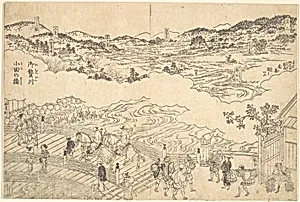
River of Omue and Bridge of Oda
Medium
Woodblock print; ink on paper
Dimensions
8 1/4 x 12 1/4 in. (21 x 31.1 cm)
Classification
Prints
Culture & Period
Japan · Edo period (1615–1868)
Department
Asian Art
Museum
Metropolitan Museum of Art, New York, NY
Credit
Gift of Mrs. Morris Manges, in memory of her husband, Dr. Morris Manges, 1947
Accession Number
JP3047
Rights
Public Domain
Tags
Art Historical Context
Step into the bustling world of Edo-period Japan (1615–1868) with *River of Omue and Bridge of Oda*, a captivating woodblock print from around 1700. Created by an unidentified artist using ink on paper, this intimate 8¼ × 12¼-inch work depicts a lively riverside scene featuring the iconic Bridge of Oda spanning the River of Omue. Crowds of people, horses, and lush trees animate the composition, evoking the energy of travel and daily life along Japan's waterways. Woodblock printing, a hallmark of Japanese artistry, allowed for affordable production and wide distribution during the Edo era—a time of relative peace, urban growth, and rising merchant culture. These prints often captured "ukiyo-e" (pictures of the floating world) themes, though this early example predates the genre's peak, highlighting precursors to later masters like Hokusai. The technique's precise carving and inking brought dynamic perspectives to everyday vistas, making art accessible beyond elites. Housed in the Metropolitan Museum of Art's Asian Art Department as a gift from Mrs. Morris Manges in 1947, this print offers a window into 18th-century Japan, where bridges symbolized connection and commerce amid natural beauty. A delightful glimpse of historical vibrancy!