
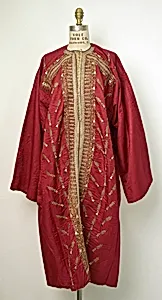
Robe
Unknown Artist
19th century
Medium
Cotton, metal wrapped thread; embroidered
Dimensions
L. 46 in. (116.8 cm)
Classification
Main dress-Womenswear
Department
Islamic Art
Museum
Metropolitan Museum of Art, New York, NY
Credit
Gift of Chester Dale, 1953
Accession Number
C.I.53.74.6
Rights
Public Domain
Art Historical Context
This exquisite 19th-century embroidered robe, a gift to the Metropolitan Museum of Art from Chester Dale in 1953, exemplifies the refined artistry of Islamic textiles. Crafted from cotton with intricate embroidery using metal-wrapped threads, the garment measures 46 inches in length, designed as womenswear for everyday or ceremonial use. The shimmering metal threads—often a hallmark of luxury in Islamic dress—catch the light, transforming the robe into a wearable work of art that blended functionality with opulence. In the Islamic world of the 19th century, such robes held deep cultural significance, reflecting social status, regional traditions, and skilled craftsmanship passed down through generations of women artisans. Embroidery techniques like couching and satin stitch, common in Ottoman, Persian, or North African contexts, allowed for elaborate patterns that symbolized protection, fertility, or prosperity. Though the artist remains unknown, the robe's preservation highlights the enduring value placed on these textiles. Visitors to the Met's Islamic Art department can appreciate how this piece bridges fashion and fine art, offering a glimpse into the lives of women whose creativity adorned both body and home.