
Robe
Unknown Artist
second half 18th century
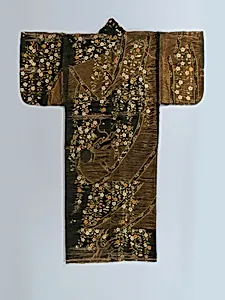
Medium
Silk
Dimensions
Overall: 65 1/2 x 49 in. (166.4 x 124.5 cm)
Classification
Costumes
Culture & Period
Japan · Edo period (1615–1868)
Department
Asian Art
Museum
Metropolitan Museum of Art, New York, NY
Credit
Edward C. Moore Collection, Bequest of Edward C. Moore, 1891
Accession Number
91.1.63
Rights
Public Domain
Art Historical Context
This elegant silk robe from Japan's Edo period (1615–8), crafted in the second half of 18th century, the refined artistry of traditional Japanese textiles. Measuring an impressive 65½ x 49 inches (166.4 x 124.5 cm), it belongs to the kosode category—a precursor to the modern kimono—worn by women of the merchant and samurai classes. During the Edo era, a time of relative peace under the Tokugawa shunate, such garments became canvases for luxurious fashion, reflecting social status and urban sophistication in cities like Edo (modern Tokyo). Silk, prized for its luster and durability, was dyed and woven using sophisticated techniques like yūzen, which allowed for intricate, painterly patterns inspired by nature, theater, and daily life. Though the artist remains unknown, the robe's creation highlights the collaborative mastery of dyers, weavers, and designers in Japan's thriving textile industry. These costumes were not mere clothing but wearable art, embodying the ukiyo-e spirit of fleeting beauty. Acquired through the Edward C. Moore Collection and now housed in the Metropolitan Museum of Art's Asian Art Department, this robe offers a glimpse into 18th-century Japanese elegance. Visitors can appreciate how its scale and craftsmanship captured the era's prosperity and aesthetic harmony.