
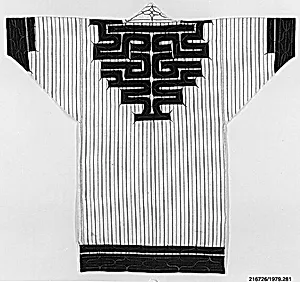
Robe (Ainu)
Unknown Artist
19th century
Medium
Cotton / Embroidery
Dimensions
60 x 50 in. (152.40 x 127 cm)
Classification
Textiles-Costumes
Culture
Japan
Department
Asian Art
Museum
Metropolitan Museum of Art, New York, NY
Credit
Purchase, Seymour Fund and Gift of Mrs. Russell Sage, by exchange, 1979
Accession Number
1979.281
Rights
Public Domain
Art Historical Context
This exquisite 19th-century A robe, on view in the Metropolitan Museum of's Asian Art department, the indigenous textile traditions of Japan's northernmost people. Crafted from cotton and enriched with meticulous embroidery, the garment spans a generous 60 by 50 inches (152.4 by 127 cm), suggesting its use in ceremonial or daily wear. Acquired in 1979 through the Fund and a gift from Mrs. Russell, it stands as a testament to Ainu craftsmanship by an unknown artist, blending with profound cultural symbolism. The Ainu, native to Hokkaido and surrounding regions, developed a distinctive style of attire that set them apart from mainland Japanese culture. Women artisans typically created these robes, employing embroidery techniques with silk threads or native materials to form geometric patterns—often evoking rivers, mountains, and protective spirits. This labor-intensive medium not only ensured durability in harsh climates but also served ritual purposes, warding off misfortune and honoring ancestral beliefs. Today, such robes highlight the Ainu's enduring artistic legacy amid historical assimilation pressures. Marvel at the intricate stitches, a silent story of resilience and harmony with nature woven into every thread.