
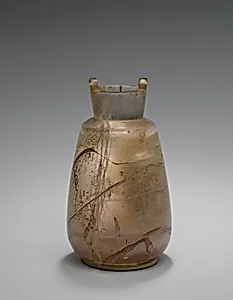
Rock crystal bottle
Unknown Artist
ca. 5th–2nd century BCE
Medium
Rock crystal
Dimensions
H.: 4 3/8 in. (11.1 cm)
Classification
Gold and Silver
Culture & Period
Cypriot or Phoenician · Classical or Hellenistic
Department
Greek and Roman Art
Museum
Metropolitan Museum of Art, New York, NY
Credit
The Cesnola Collection, Purchased by subscription, 1874–76
Accession Number
74.51.3599
Rights
Public Domain
Art Historical Context
This exquisite rock crystal bottle, dating to around the 5th–2nd century BCE, hails from either Cypriot or Phoenician during the Classical or Hellenistic periods. Standing just 4 3/8 inches (11.1 cm) tall, it exemplifies the luxury craftsmanship of the Eastern Mediterranean, where rock crystal—a clear, durable form of quartz—was prized for rarity and translucency. Likely used as a perfume or oil flask, its petite, elegant form reflects the refined tastes of elite patrons in bustling trade hubs like Cyprus and Phoenicia, regions bridging Greek, Persian, and Near Eastern influences. Artisans employed skilled lapidary techniques to carve and polish the hard stone into a flawless vessel, a testament to the era's mastery over challenging materials. Such bottles were status symbols, often exchanged as diplomatic gifts or grave offerings, highlighting the interconnected world of ancient seafaring cultures. Though the artist remains unknown, the object's precision speaks to workshops thriving amid Hellenistic expansion. Acquired through The Cesnola Collection—assembled by diplomat Luigi Palma di Cesnola and purchased for the Metropolitan Museum of Art in 1874–76—this piece offers a glimpse into forgotten luxuries, inviting us to imagine scented oils shimmering through its crystal walls in sunlit ancient villas.