
Romeinse triomfboog
1634 - 1694
Medium
brush
Dimensions
403; 551
Rights
Public Domain
About this artwork
hoogte 551 mm (drie aan elkaar geplakte bladen papier) x breedte 403 mm
Art Historical Context
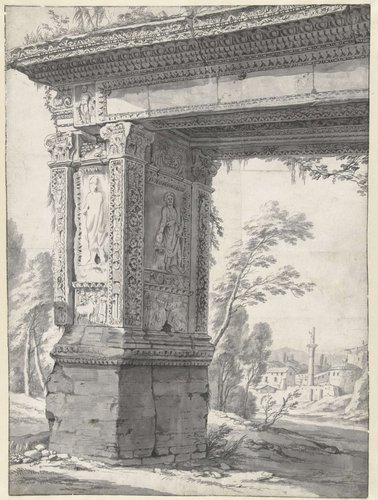
Step into the grandeur of ancient Rome through *Romeinse triomfboog* (Roman Triumphal Arch), captivating brush drawing by Dutch artist Willem Romeyn (4–1694). This work captures the imposing architecture of a Roman triumphal arch, a monumental structure built to commemorate military victories and imperial power. Such arches, like the Arch of Constantine or Titus in Rome, symbolized triumph and eternity, inspiring artists across centuries with their intricate carvings, columns, and inscriptions. Crafted with brush on paper, the drawing measures 551 mm high by 403 mm wide—a modest yet impressive scale achieved by gluing three sheets together. This technique, common in the 17th century, allowed Romeyn to expand his canvas for detailed rendering, showcasing his skill in architectural precision and dynamic composition. During the Dutch Golden Age, artists like Romeyn often evoked classical antiquity amid a flourishing interest in history and travel sketches. This piece invites us to ponder Rome's enduring legacy, bridging 17th-century Northern Europe with the eternal city. A testament to technical ingenuity and historical reverence, it reminds museum-goers of art's power to resurrect the past.