
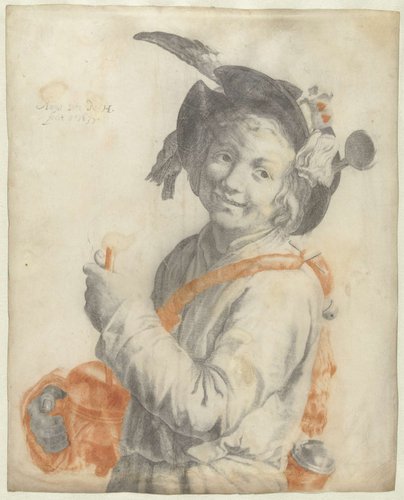
Rommelpotspelende jongen
1637
Medium
parchment (animal material)
Dimensions
280; 225
Rights
Public Domain
About this artwork
hoogte 280 mm x breedte 225 mm
Art Historical Context
In the heart of the Dutch Golden Age, Anna van N.H. captured a charming moment of childhood play in *Rommelpotspelende* (Boy Playing the Rommelpot), dated 1637. This intimate genre scene depicts a young boy engaged with the rommelpot—a rustic folk instrument made from an earthenware pot covered with a pig's bladder membrane, vibrated by a wooden stick dipped in water to produce a humming drone. Such instruments were beloved in 17th-century Netherlands, often played by children or itinerant performers during festivals like Carnival or Easter, symbolizing joy, mischief, and everyday rural life amid the era's prosperity. Rendered on parchment—an animal-derived material typically used for illuminated manuscripts or fine drawings—this small work (280 × 225 mm) highlights the artist's skillful adaptation of a delicate support. Parchment's smooth, luminous surface would have allowed for precise lines and subtle shading, lending a tactile intimacy suited to domestic scenes. Though Anna van N.H. remains lesser-known, her choice reflects the growing interest among Dutch women artists in capturing vernacular culture, paralleling masters like Jan Steen. This piece offers a window into 17th-century Dutch social fabric, where folk traditions thrived alongside artistic innovation, reminding us of the simple pleasures that inspired the era's vivid storytelling.