
Rooster
Giambologna, probably 19th–20th century
About this artwork
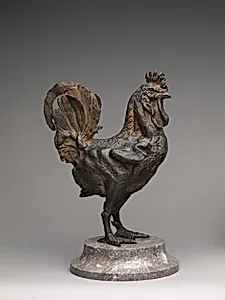
This delightful bronze *Rooster* is attributed to the renowned Mannerist sculptor GiambolognaGiambologna, 1529–1608), though it dates to the 19th or 20th century, a later cast after one of his original small-scale models. Standing just under 9 inches tall on a modern stone base, this compact sculpture captures the bird in a dynamic pose—head held high, feathers intricately textured—perfect for a tabletop or collector's cabinet. Giambologna, a Flemish artist who thrived in Renaissance Florence, was a master of bronze casting, producing lively animal figures that showcased his skill in capturing movement and anatomy with elegant elongation typical of Mannerism. Bronze as a medium allowed for the fine detailing seen here, from the rooster's ruffled plumage to its alert stance, evoking the vigilance and crowing herald of dawn in European folklore. Roosters held cultural symbolism across Italian and French traditions as emblems of watchfulness and resurrection, making such sculptures popular decorative objects for the elite. Acquired by The Metropolitan Museum of Art in 1958 through the Edith Perry Chapman Fund, this piece exemplifies the enduring appeal of Giambologna's designs, bridging Renaissance innovation with later artisanal revival. Visitors will appreciate its lifelike energy up close in the European Sculpture and Decorative Arts galleries.