
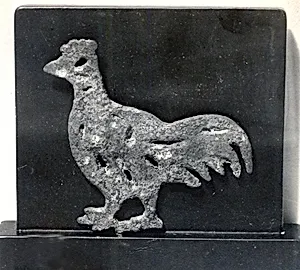
Rooster Figure
Unknown Artist
Medium
Bronze
Dimensions
H. 3 3/8 in. (8.6 cm); W. 2 1/2 in. (6.4 cm)
Classification
Metalwork
Culture & Period
China · Han dynasty (206 B.C.–A.D. 220)
Department
Asian Art
Museum
Metropolitan Museum of Art, New York, NY
Credit
Rogers Fund, 1928
Accession Number
28.124.3
Rights
Public Domain
Tags
Art Historical Context
Nestled in the Metropolitan Museum of Art's Asian Art collection, this charming bronze Rooster Figure (H. 3 3/8 in.; W. 2 1/2 in.) hails from China's Han dynasty (206 B.–A.D. 220), a golden age of innovation and cultural flourishing. Crafted by an unknown artist, this petite metalwork exemplifies the era's mastery of bronze casting, likely produced using the lost-wax technique or piece-mold methods that allowed for intricate details on small-scale objects. In Han China, roosters held symbolic power as emblems of vigilance, punctuality, and the dispelling of evil spirits, often appearing in tombs or as auspicious ornaments. This lively figure, with its alert posture and textured feathers, may have served a funerary purpose, accompanying the deceased into the afterlife alongside other animal guardians. The Rogers Fund acquisition in 1928 highlights its enduring appeal, bridging ancient craftsmanship with modern appreciation. Han bronzes like this one showcase the dynasty's technical prowess and artistic vitality, reflecting a society that valued harmony between humans, nature, and the cosmos. A delightful glimpse into everyday symbolism turned eternal art!