
Rose et Colas
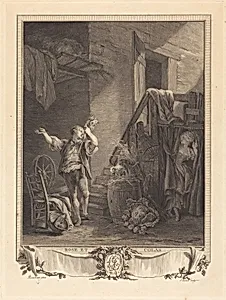
Medium
etching and engraving
Classification
Department
CG-E
Museum
National Gallery of Art, Washington, D.C.
Credit
Widener Collection
Accession Number
1942.9.2140
Rights
Public Domain
Art Historical Context
"Rose et Colas," exquisite etching and engraving from the mid-18th centuryca. 1726–1750), showcases the reproductive talents of Jean-Baptiste Blaise Simonet working after the designs of Pierre-Antoine Baud. Housed in the National Gallery Art's Widener CollectionDepartment CG-E), this print exemplifies the Rococo era's delight in elegant, playful imagery. Baudouin, a prominent French painter known for his graceful genre scenes and decorative works, provided the original composition, which Simonet masterfully translated into print form for broader dissemination. The medium—etching combined with engraving—highlights innovative 18th-century printmaking techniques. Etching allowed for fluid, spontaneous lines etched by acid, while engraving added precise, durable detail through direct incision into the plate. This hybrid approach captured subtle textures and tonal nuances, making fine art accessible beyond elite patrons to a growing middle-class audience eager for sophisticated home decorations. As a testament to the period's cultural vibrancy, "Rose et Colas" reflects the French fascination with pastoral or theatrical themes, evoking the lighthearted spirit of opéra comique traditions. Visitors will appreciate its historical role in democratizing art, preserving Baudouin's vision through Simonet's skilled hand. A charming window into Enlightenment-era elegance!