
Rosette
Unknown Artist
ca. 1540
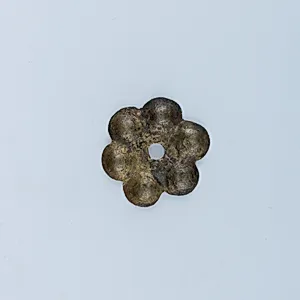
Medium
Brass
Dimensions
Diam. 3/4 in. (1.9 cm); thickness 1/8 in. (0.3 cm); Wt. 0.03 oz. (1 g)
Classification
Miscellaneous-Buckles & Ornament
Culture
French
Department
Arms and Armor
Museum
Metropolitan Museum of Art, New York, NY
Credit
Gift of Bashford Dean, 1920
Accession Number
20.152.171
Rights
Public Domain
Art Historical Context
Nestled in the Metropolitan Museum of Art's renowned Arms and Armor Department, this delicate brass *Rosette* (ca. 1540) is a exquisite example of French Renaissance metalwork. Measuring just 3/4 inch in diameter and weighing a mere 0.03 ounces, this tiny ornament—classified as a buckle or decorative fitting—showcases the era's mastery of small-scale craftsmanship. Donated in 1920 by collector Bashford Dean, it invites visitors to appreciate the intricate details that once embellished everyday objects. Crafted from brass, a durable yet malleable alloy prized for its golden sheen, the rosette likely served as an ornamental stud or mount on belts, harnesses, or armor. During the 16th century in France, under the influence of the Renaissance, such pieces blended functionality with subtle elegance, reflecting the period's growing appreciation for refined decoration amid chivalric culture and courtly fashion. Its modest size belies the skill required to shape and polish brass into a precise, symmetrical form. Though the artist remains unknown, this artifact highlights the anonymous artisans who elevated utilitarian items into works of art. It offers a glimpse into the tactile world of Renaissance France, where even the smallest adornments carried cultural weight, bridging military might and aesthetic grace. A perfect gem for pondering the artistry in the overlooked!