
Rouen
1888
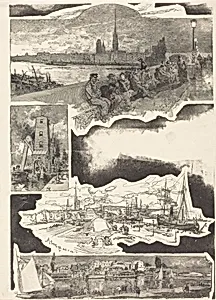
Medium
wood engraving
Classification
Department
CG-E
Museum
National Gallery of Art, Washington, D.C.
Credit
Ailsa Mellon Bruce Fund
Accession Number
1974.62.5
Rights
Public Domain
Art Historical Context
**Rouen** by Auguste Lepère (1888) is a captivating wood engraving that invites visitors to explore the charm of this historic Norman city in France. Lepère, a masterful French illustrator and engraver active in the late 19th, specialized in detailed depictions of medieval architecture and urban scenes. Created during the Belle Époque, when artists celebrated France's picturesque past amid rapid modernization, this print likely captures Rouen's iconic half-timbered houses and spires, evoking a of timeless beauty. Wood engraving, Lepère's chosen medium, was a refined technique using the dense end-grain of boxwood to produce exceptionally fine lines and textures—ideal for book illustrations and fine art prints. This method allowed for intricate shading and precision, bridging traditional craftsmanship with emerging reproductive technologies. As a print in the National Gallery of Art's collection (Department CG-E), acquired through the Ailsa Mellon Bruce Fund, it exemplifies the revival of engraving as an art form in fin-de-siècle France. Step into Lepère's Rouen and feel the whisper of history: a testament to an artist's eye for enduring French heritage, perfect for savoring in our virtual gallery. (198 words)
About the Artist
Auguste Lepère · 1849–1918
Auguste-Louis Lepère (1849–1918), son of the sculptor François Lepère, was born in Paris on November 30, 1849, into an artistic family that shaped his early path. At age thirteen, he apprenticed in the Paris studio of the English wood engraver Joseph Burn Smeeton, honing his skills in wood engraving until 1867. He furthered his training with drawing classes under Horace Lecoq de Boisbaudran at the...