
波濤図屏風|Rough Waves
Ogata Kōrin, ca. 1704–9
About this artwork
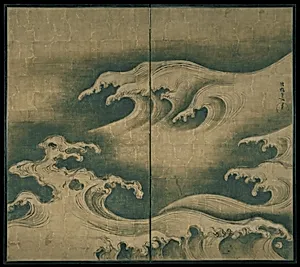
Ogata Kōrin's *Rough Waves* (波濤図屏風), created around 1704–9, is a stunning two-panel folding screen from Japan's Edo period (1615–1868). Crafted with ink, vibrant colors, and shimmering gold leaf on paper, it measures nearly five feet tall, designed to serve as both art and room divider in affluent homes. The Metropolitan Museum of Art acquired it through the Fletcher Fund in 1926, where it now captivates visitors in the Asian Art department. Kōrin, a leading figure in the Rinpa school of decorative painting, transformed traditional Japanese motifs into bold, stylized compositions. Here, turbulent waves crash with rhythmic energy against an opulent gold-leaf sea, evoking nature's raw power while celebrating aesthetic beauty. Rinpa artists like Kōrin favored asymmetrical designs, flattened perspectives, and lavish materials, drawing from earlier masters like Tawaraya Sōtatsu. This screen exemplifies Edo-era opulence, where such byōbu graced tea rooms and elite residences, blending functionality with artistry. Its dynamic waves not only highlight masterful ink washes and mineral pigments but also reflect Japan's enduring fascination with the sea's majesty, inviting viewers to ponder harmony amid chaos.