
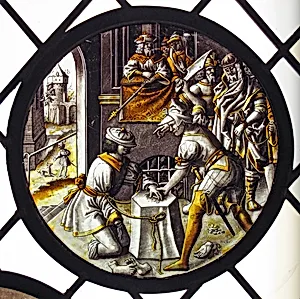
Roundel with Martyrdom of Saint Jacobus Intercisus
Unknown Artist
ca. 1520
Medium
Colorless glass, vitreous paint and silver stain
Dimensions
Overall: 7 15/16 in. (20.2 cm)
Classification
Glass-Stained
Culture
North Netherlandish or South Netherlandish
Department
The Cloisters
Museum
Metropolitan Museum of Art, New York, NY
Credit
The Cloisters Collection, 1991
Accession Number
1991.291.2
Rights
Public Domain
Tags
Art Historical Context
This exquisite stained glass roundel, created around 1520 by an unknown North or South Netherlandish artist depicts the dramatic Martyrdom of Saint Jamescisus (also known James the Mutilated). The saint, a 5th-century Persian martyr, is shown enduring gruesome torture—his body dismembered piece by piece for refusing to renounce his faith under Persian rule. Such vivid scenes of suffering underscored themes of piety and endurance, resonating deeply with Renaissance viewers in the Low Countries. Crafted from colorless glass adorned with vitreous paint for bold outlines and details, and silver stain for luminous yellows and oranges, the roundel measures just under 8 inches in diameter. These techniques, hallmarks of late medieval and early Renaissance glassmaking, allowed for intricate narratives in small formats. Roundels like this were popular in private homes or secular buildings, offering portable devotionals or decorative accents that brought sacred stories into everyday life. Housed in The Cloisters at the Metropolitan Museum of Art (The Cloisters Collection, 1991), this piece exemplifies the enduring Netherlandish mastery of stained glass during a transitional era, blending Gothic traditions with emerging Renaissance naturalism. It invites us to reflect on faith's trials amid beauty's glow.