
Rouwstoet in Amsterdam
1816 - 1833
Medium
etching
Dimensions
155; 220
Rights
Public Domain
About this artwork
blad: hoogte 155 mm x breedte 220 mm
Art Historical Context
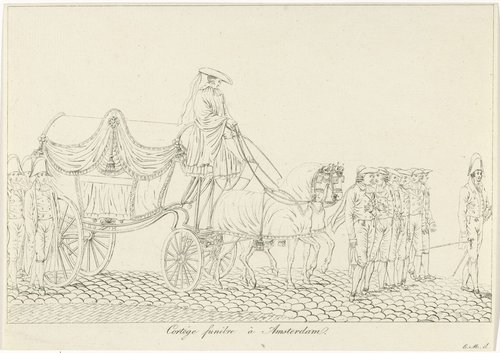
**Rouwstoet in Amsterdam** is a delicate etching by Dutch artist Roelof van der Meulen, created between 1816 and 1833. Measuring just 155 mm high by 220 mm wide, this intimate print captures a somber funeral procession winding through the streets of Amsterdam. Van der Meulen, known for his topographic views of the city, skillfully documents everyday life and significant events, offering a window into early 19th-century urban Netherlands during the Kingdom's formative years after Napoleonic rule. As an etching, the work showcases the precision of this intaglio technique, where acid bites into a metal plate to create fine lines and rich tonal contrasts. This method allowed artists like van der Meulen to produce detailed, reproducible images of architecture, crowds, and atmosphere, making such scenes accessible beyond original sketches. The compact format suggests it was designed for collectors or as part of a series illustrating Amsterdam's vibrant street life. Culturally, the piece reflects the Dutch tradition of vedute—topographical prints that preserved the city's canals, gables, and rituals. A funeral cortege evokes the communal mourning practices of the era, blending historical record with quiet pathos, inviting viewers to ponder the humanity amid the hustle of old Amsterdam.