
Rowel Spur (Left)
Unknown Artist
15th century
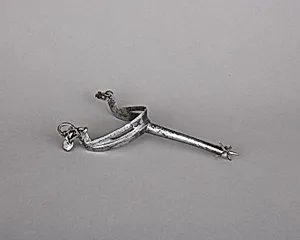
Medium
Iron alloy
Dimensions
L. 7 1/4 in. (18.4 cm); W. 3 5/8 in. (9.2 cm); Diam. of rowel 1 1/4 in. (3.2 cm); Wt. 4.4 oz. (124.7 g)
Classification
Equestrian Equipment-Spurs
Culture
Bohemian
Department
Arms and Armor
Museum
Metropolitan Museum of Art, New York, NY
Credit
Gift of Stephen V. Grancsay, 1942
Accession Number
42.50.278
Rights
Public Domain
Art Historical Context
Step into the world of medieval equestrian prowess with this 15th-century Bohem rowel spur, a finely crafted piece of iron alloy designed for the left foot of a mounted rider. Measuring 7¼ inches long with a 1¼-inch diameter rowel rotating spiked wheel for precise horse control—this spur exemplifies the practical ingenuity of late medieval metalworking. Its modest weight 4.4 ounces comfort during long rides, while sturdy construction highlights Bohemian smiths' expertise in forging durable alloys for everyday use in the saddle. Originating from Bohemia (modern-day Czech Republic) during a turbulent era of knightly warfare and the Hussite conflicts, spurs like this were indispensable for cavalrymen and nobility. They symbolized status and horsemanship, essential skills in a society where mounted combat decided battles. The left-specific design reflects the asymmetry of medieval tack, tailored for right-handed riders urging their steeds forward. Now part of the Metropolitan Museum of Art's renowned Arms and Armor collection—gifted by Stephen V. Grancsay in 1942—this spur offers a tangible link to chivalric life. Though functional, its precise proportions reveal an artistry in utility, inviting us to imagine the thunder of hooves across Bohemian fields.