
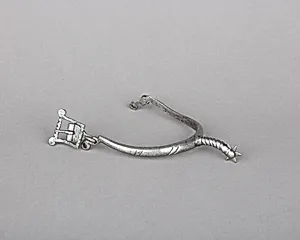
Rowel Spur (Left)
Unknown Artist
18th century
Medium
Iron
Dimensions
L. 5 1/4 in. (13.3 cm); W. 4 1/8 in. (10.5 cm); Diam. of rowel 3/4 in. (1.9 cm); Wt. 2.6 oz. (73.7 g)
Classification
Equestrian Equipment-Spurs
Culture
German
Department
Arms and Armor
Museum
Metropolitan Museum of Art, New York, NY
Credit
Gift of Stephen V. Grancsay, 1942
Accession Number
42.50.311
Rights
Public Domain
Art Historical Context
This elegant iron rowel spur, crafted in 18th-century Germany, exemplifies the refined equestrian equipment of the period. Measuring just over five inches in length with a delicate rowel wheel, the spur was designed for precise control during horseback riding. Its left-side orientation and modest weight of 2.6 ounces suggest it was part of a matched pair intended for practical use by riders who valued both functionality and subtle ornamentation in their tack. Rowel spurs like this one played an important role in European riding culture, where horsemanship was essential for travel, hunting, and military endeavors. The choice of iron allowed artisans to shape durable yet lightweight pieces that could withstand daily wear while permitting intricate detailing on the shank and heel band. Such objects reflect the high standards of German metalworkers, who balanced utility with aesthetic refinement. Acquired by the Metropolitan Museum of Art in 1942 as a gift from Stephen V. Grancsay, this spur now offers visitors a tangible connection to the everyday elegance of 18th-century German equestrian life. Its presence in the Arms and Armor collection highlights how even utilitarian riding tools were elevated to objects of lasting craftsmanship.