
Rush Bottom Chair
c. 1937
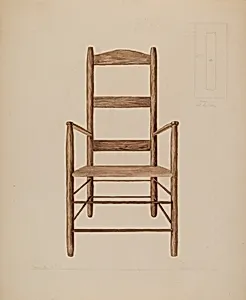
Medium
watercolor, colored pencil, and graphite on paperboard
Dimensions
overall: 27.8 x 22.8 cm (10 15/16 x 9 in.) Original IAD Object: none given
Classification
Index of American Design
Department
CG-W
Museum
National Gallery of Art, Washington, D.C.
Credit
Index of American Design
Accession Number
1943.8.4608
Rights
Public Domain
Art Historical Context
Henry Meyers' *Rush Bottom Chair* (c. 1937) is a meticulous rendering of a classic piece of American folk furniture, in watercolor, colored pencil, and on paperboard. Measuring just under 11 by 9 inches, this study showcases the chair's sturdy wooden frame and intricately woven rush seat—a natural material derived from wetland plants, prized for its durability and breathability in everyday colonial and early American homes. Created as part of the Index of American Design, a Progress Administration (WPA) during the Great Depression, the artwork reflects a national effort to document and celebrate the nation's decorative arts heritage. Artists like Meyers employed precise techniques to highlight textures, colors, and craftsmanship, preserving vanishing traditions amid economic hardship and industrialization. This piece underscores the cultural importance of vernacular design: simple, functional chairs like this were staples in rural and working-class households, embodying self-reliant American ingenuity. Meyers' skilled layering of media brings the chair's humble elegance to life, inviting us to appreciate the artistry in the ordinary.
About the Artist
Henry Meyers · 1855–present
Henry Meyers was an American artist active during the 1930s and early 1940s, best known for his contributions to the Index of American Design, a monumental Works Progress Administration (WPA) project that sought to document the nation's rich heritage of folk art, crafts, and decorative objects. Operating under the Federal Art Project, Meyers produced precise, watercolor and graphite renderings of ...