
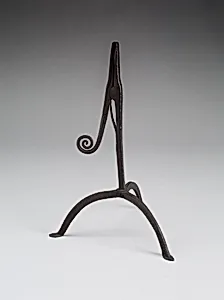
Rushlight Holder
1750–1850
Medium
Iron
Dimensions
24.8 ✕ 17.1 ✕ 15.2 cm (9 3/4 ✕ 6 3/4 ✕ 6 in.)
Classification
metalwork
Department
Arts of the Americas
Museum
Art Institute of Chicago
Accession Number
68743
Rights
Public Domain
Art Historical Context
This unassuming iron Rushlight Holder, crafted between 1750 and 1850 in the Americas, a glimpse into the everyday ingenuity of colonial and early American life. Before gas lamps or electricity illuminated homes, rushlights—simple wicks made from rush reeds dipped in tallow or wax—provided affordable, if dim, light for humble households. Measuring just under 10 inches tall, this functional metalwork piece from the Art Institute of Chicago's Arts of the collection cradled these fragile lights securely, preventing drips and fires in drafty cabins or farmsteads. Forged from sturdy iron, the holder exemplifies vernacular metalwork techniques of the era, likely produced by local blacksmiths using basic hammering, bending, and riveting. Its compact, practical design—balancing utility with subtle form—highlights the anonymous artisan's skill in creating durable tools from readily available materials. Far from mere utility, such objects embody the resourcefulness of frontier living, bridging the gap between craft and necessity. Today, it reminds us of lighting's evolution and the quiet artistry in overlooked domestic artifacts, inviting visitors to appreciate the shadows of history.