
Ruyi Scepter
Unknown Artist
18th–19th century
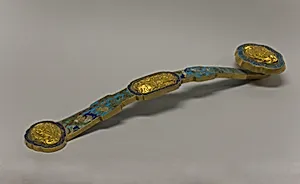
Medium
Cloisonné enamel with gilt-bronze medallions
Dimensions
L. 17 1/2 in. (44.5 cm)
Classification
Cloisonné
Culture & Period
China · Qing dynasty (1644–1911)
Department
Asian Art
Museum
Metropolitan Museum of Art, New York, NY
Credit
Gift of Edward G. Kennedy, 1929
Accession Number
29.110.45
Rights
Public Domain
Art Historical Context
Behold the elegant **Ruyi Scepter**, a masterful example of Qing dynasty (1644–1911) craftsmanship from 18th–19th China. Measuring 17½ inches (44.5 cm) in length, this ceremonial object embodies the ruyi—a symbolic scepter shaped like a lingzhi fungus or cloud scroll, representing "as you wish" boundless good fortune. In imperial China, ruyi scepters were cherished talismans of power and prosperity, often presented as gifts to emperors, officials, or during auspicious occasions like weddings and birthdays. Crafted in cloisonné enamel with gilt-bronze medallions, the scepter showcases a pinnacle of Chinese decorative arts. Cloisonné technique involves soldering thin metal wires onto a bronze body to form intricate compartments, or *cloisons*, which are filled with vibrant glass-enamel pastes in shades of turquoise, crimson, and gold. Multiple firings fuse the enamels, followed by polishing to reveal luminous designs of floral motifs, bats (symbols of happiness), and mythical creatures—hallmarks of Qing opulence. Now housed in the Metropolitan Museum of Art's Asian Art Department (gift of Edward G. Kennedy, 1929), this anonymous masterpiece invites us to appreciate the fusion of artistry and spirituality, evoking the grandeur of China's imperial past.