
Ryogoku Bridge
ca. 1780
Medium
Woodblock print; ink and color on paper
Dimensions
11 5/8 x 16 5/8 in. (29.5 x 42.2 cm)
Classification
Prints
Culture & Period
Japan · Edo period (1615–1868)
Department
Asian Art
Museum
Metropolitan Museum of Art, New York, NY
Credit
Gift of Mrs. Morris Manges, in memory of her husband, Dr. Morris Manges, 1947
Accession Number
JP3053
Rights
Public Domain
Tags
Art Historical Context
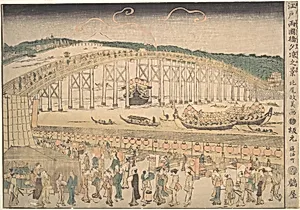
Kuwagata Keisai's *Ryogoku Bridge*ca. 1780) is a vibrant woodblock print capturing the bustling energy of Edo-period (1615–1868) Tokyo along the Sumida River.ogoku Bridge, a wooden span, was a hub of urban leisure, where crowds gathered for fireworks displays, boating excursions, and festivals. As a disciple of the pioneering ukiyo-e master Harunobu, Keisai specialized in these "bridge prints," offering affordable glimpses into the "floating world" of pleasure and everyday life for a wide audience beyond the elite. Rendered in ink and color on paper, the print measures 11 5/8 x 16 5/8 inches and showcases the meticulous woodblock technique: intricate carving for bold outlines, delicate gradations of color (benizuri-e style), and layered printing to evoke lantern glows and rippling water. Tags highlight its lively motifs—spanning boats ferrying revelers, glowing lanterns, and teahouses perched along the banks—evoking the sensory thrill of summer nights. This work exemplifies ukiyo-e's cultural role in democratizing art, preserving fleeting moments of Edo's vibrant street culture. Donated to the Metropolitan Museum of Art in 1947, it invites visitors to step into Japan's golden age of printmaking, where a single sheet bridged art and popular entertainment.