
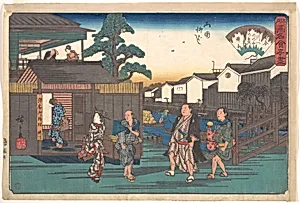
Ryogoku Yanagibashi (Umegawa)|江戸高名会亭尽 柳ばし|The Umegawa at Ryogoku Yanagibashi
ca. 1835–42
Medium
Woodblock print; ink and color on paper
Dimensions
H. 9 7/16 in. (24 cm); W. 14 3/16 in. (36 cm)
Classification
Prints
Culture & Period
Japan · Edo period (1615–1868)
Department
Asian Art
Museum
Metropolitan Museum of Art, New York, NY
Credit
Rogers Fund, 1919
Accession Number
JP1160
Rights
Public Domain
Tags
Art Historical Context
In Utagawa Hiroshige's captivating woodblock print *Ryogoku Yanagibashi (Umegawa)*, from the series *Edo Takamei Kaiten-zukushi* (Famous Teahouses of Edo), viewers are transported to the lively Ryogoku Yanagibashi bridge area along Tokyo's Sumida River around 1835–42. The scene buzzes with pleasure boats gliding by, elegant men and women enjoying tea houses, and the graceful figure of Umegawa, a celebrated teahouse courtesan or boat attendant. Hiroshige masterfully captures the fleeting joys of urban leisure in Edo-period Japan (1615–1868), where such riverside spots were hubs for socializing, poetry, and entertainment. As a leading figure in the ukiyo-e ("pictures of the floating world") tradition, Hiroshige excelled in lush landscapes and genre scenes printed with vibrant inks and colors on paper. This *oban* format (roughly 9½ × 14 inches) allowed mass production via collaborative woodblock carving, making art accessible to everyday people. His atmospheric details—like rippling water and distant bridges—evoke the transience of beauty, a core ukiyo-e theme. This print offers a vivid snapshot of Edo's vibrant culture, highlighting tea houses as social epicenters amid Japan's isolationist era. Housed in the Metropolitan Museum of Art (Rogers Fund, 1919), it celebrates Hiroshige's enduring influence on global art, from Impressionism to modern anime.
About the Artist
Utagawa Hiroshige · 1826–1869
Utagawa Hiroshige (1797–1858), born Andō Tokutarō, was the last great master of Japanese ukiyo-e woodblock printmaking and one of the most influential landscape artists in history. Born in Edo (modern Tokyo) into a low-ranking samurai family serving as fire wardens, Hiroshige transformed landscape printmaking into a poetic meditation on nature, weather, and everyday life. His revolutionary approac...