
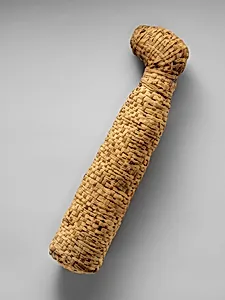
Sacred animal mummy of a cat
Unknown Artist
ca. 400 B.C.–100 A.D.
Medium
Linen, paint, animal remains, mummfication materials
Dimensions
H. 34.4 cm (13 9/16 in.); W. 9.5 cm (3 3/4 in.); D. 5.6 cm (2 3/16 in.)
Classification
Mummy, cat
Period
Late Period–Roman Period
Department
Egyptian Art
Museum
Metropolitan Museum of Art, New York, NY
Credit
Gift of Mrs. Frederick F. Thompson, 1915
Accession Number
15.6.50
Rights
Public Domain
Tags
Art Historical Context
Nestled in the Egyptian Art collection at the Metropolitan Museum of Art this sacred animal mummy of a cat (ca. 400 B.C.–100 A.D.) the profound reverence ancient Egyptians held for felines. Measuring 34.4 cm in height, the mummy is carefully wrapped in fine linen, adorned with paint, and filled with actual cat remains and mumm materials—techniques that preserved both body and spirit for the afterlife. Crafted during the Late Period to Roman Period, it reflects a time when mummification extended beyond humans to beloved animals, serving as votive offerings at temples. Cats were sacred in ancient Egypt, often linked to the goddess Bastet, symbolizing protection, fertility, and domestic joy. Pilgrims would purchase or donate these mummies to seek divine favor, making them ubiquitous artifacts from bustling cult centers like Bubastis. The painted linen wrapping, sometimes featuring intricate designs or portraits, added a layer of artistry, transforming a simple burial into a devotional icon. Gifted to the Met in 1915 by Mrs. Frederick F. Thompson, this delicate artifact invites us to ponder the everyday spirituality of ancient life—where even a household pet could embody the divine. A charming window into Egypt's animal-loving culture!