
Sacrificial Vessel
Unknown Artist
Medium
Nephrite
Dimensions
H. 7 1/2 in. (19.1 cm); W. 3 1/4 in. (8.3 cm); L. 9 in. (22.9 cm)
Classification
Jade
Culture & Period
China · early Ming dynasty (1368–1644)
Department
Asian Art
Museum
Metropolitan Museum of Art, New York, NY
Credit
Gift of Heber R. Bishop, 1902
Accession Number
02.18.346
Rights
Public Domain
Tags
Art Historical Context
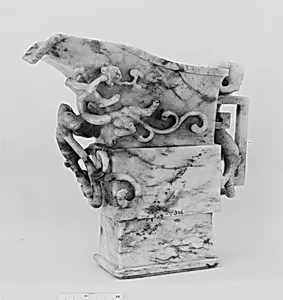
This exquisite sacrificial vessel, carved from nephrite jade, hails from China's early Ming dynasty (136–1644), a golden age of imperial refinement and artistic revival. Standing at 7½ inches high, 3¼ inches wide, and inches long, its compact yet imposing form was designed for ritual use, likely in ancestral worship or offerings to deities. Nephrite, prized for its toughness and luminous translucency, was a material of profound spiritual significance in ancient China, symbolizing purity, immortality, and heavenly power—perfect for sacred objects like this one. The vessel's surface bears intricate carvings of dragons, majestic creatures embodying imperial authority, cosmic energy, and protection in Chinese cosmology. During the Ming era, jade craftsmanship reached new heights of precision, with artisans employing fine tools to achieve fluid, dynamic motifs that seem to writhe across the stone. Though the artist remains unknown, such works reflect the court's patronage of jade ateliers, blending Neolithic traditions with Renaissance-like technical innovation. A gift to the Metropolitan Museum of Art from Heber R. Bishop in 1902, this vessel invites us to ponder the Ming elite's devotion to ritual harmony, where every curve of jade bridged the mortal and divine.