
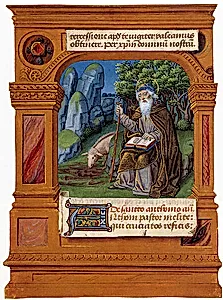
Saint Anthony
ca. 1480–85
Medium
Tempera and liquid gold on parchment
Dimensions
6 1/4 x 4 1/4 in. (15.8 x 10.8cm) Miniature: 2 15/16 x 2 15/16 in. (7.5 x 7.4cm)
Classification
Manuscripts and Illuminations
Culture
French, probably Provence
Department
Robert Lehman Collection
Museum
Metropolitan Museum of Art, New York, NY
Credit
Robert Lehman Collection, 1975
Accession Number
1975.1.2467
Rights
Public Domain
Tags
Art Historical Context
This exquisite miniature, *Saint Anthony*, hails from late 15th-century France, likely Provence, created around 1480–85. Part of an illuminated manuscript in the Robert Lehman Collection at the Metropolitan Museum of Art, it captures the revered saint—probably Anthony of Padua—in a intimate scene of reading, accompanied by sheep. These gentle animals evoke the saint's miraculous legend of preaching to fish when humans wouldn't listen, symbolizing his role as patron of animals and lost things. Measuring just under 3 inches square within a larger parchment leaf, it reflects the devotional art of the era, when such tiny masterpieces adorned personal prayer books for the elite. Crafted in tempera paints and shimmering liquid gold on vellum parchment, the work showcases the refined techniques of French illumination at the cusp of the Renaissance. The gold heightens the divine aura, catching light to mimic heavenly glow, while delicate brushwork brings lifelike texture to the saint's robes, book, and woolly sheep. Provence's regional style blended Gothic intricacy with emerging naturalism, making these manuscripts prized treasures. Today, this gem offers a window into medieval piety and artistry, reminding us how portable illuminations fostered daily spiritual connection in a pre-printing press world. A testament to anonymous mastery, it endures in the Met's collection since 1975.