
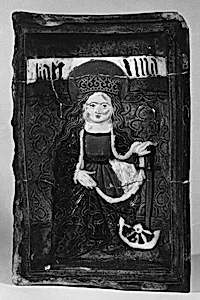
Saint Catherine of Alexandria
Unknown Artist
ca. 1500
Medium
Lead-glazed earthenware (Hafnerware); with some tin-glazed white areas.
Dimensions
Gr. H. 12-3/8 x Gr. W. 7-7/8 in. (31.4 x 20.0 cm)
Classification
Ceramics-Pottery
Culture
German, Saxony or Thuringia
Department
European Sculpture and Decorative Arts
Museum
Metropolitan Museum of Art, New York, NY
Credit
Gift of R. Thornton Wilson, in memory of the late Harriette Post Welles, 1969
Accession Number
69.240
Rights
Public Domain
Tags
Art Historical Context
This charming statuette of *Saint Catherine of Alexandria*, crafted around 1500 in Saxony or Thuringia,, captures the saint as a symbol of faith and resilience during the late Gothic period. Saint Catherine, a revered Christian martyr, is often depicted with attributes like the spiked breaking wheel—from which she miraculously survived—and a sword signifying her beheading. Produced as a devotional object, this piece likely adorned private altars or homes, reflecting the era's deep Catholic piety amid the eve of the Reformation. Made of lead-glazed earthenware known as Hafnerware, the sculpture showcases a regional specialty from central Germany, where potters fired colorful, molded figures in Hafner ovens. The lead glaze provided a vibrant, glossy finish in earthy tones, while select tin-glazed white areas added luminous highlights, mimicking costlier maiolica. At just over 12 inches tall, its modest scale and tactile medium made it accessible to middle-class devotees, highlighting ceramics' rise as an art form beyond elite workshops. Today, this rare survivor—gifted to The Metropolitan Museum of Art in 1969—offers a window into everyday religious life in Renaissance Germany, blending artistry with spiritual devotion.