
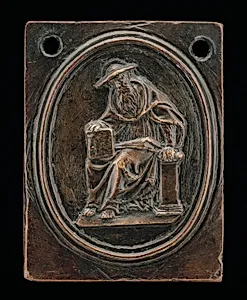
Saint Jerome
c. 1500
Medium
bronze//Medium brown patina
Dimensions
overall: 6.45 x 4.95 cm (2 9/16 x 1 15/16 in.) overall (inner dimensions of oval field): 4.75 x 3.6 cm (1 7/8 x 1 7/16 in.) gross weight: 150.84 gr (0.333 lb.)
Classification
Sculpture
Department
CSD
Museum
National Gallery of Art, Washington, D.C.
Credit
Samuel H. Kress Collection
Accession Number
1957.14.408
Rights
Public Domain
Art Historical Context
This delicate bronze plaquette, created around 1500 by an anonymous artist from Northern Italy, captures Saint Jerome in a compact oval format measuring just under two inches wide. During the early Renaissance, such small-scale bronzes served both devotional and collectible purposes, allowing patrons to carry or display images of revered saints in their homes or studies. The medium brown patina enhances the subtle modeling of the figure, a technique typical of North Italian workshops that drew inspiration from classical cameos and medals. Saint Jerome, the fourth-century scholar and translator of the Bible into Latin, was a favorite subject in Renaissance art, symbolizing humanist learning and spiritual devotion. The piece’s intimate size and refined casting reflect the period’s growing interest in portable sculpture that blended religious themes with antique aesthetics. Acquired as part of the Samuel H. Kress Collection, this work now resides in the National Gallery of Art, offering visitors a glimpse into the private piety and artistic sophistication of sixteenth-century Italy.