
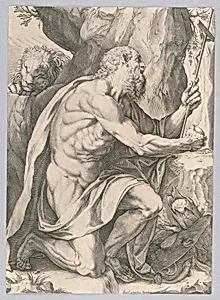
Saint Jerome
Classification
religion
Department
Smithsonian Collection
Museum
Smithsonian American Art Museum
Credit
Smithsonian American Art Museum
Accession Number
1946-55-293
Rights
Public Domain
About this artwork
Research in Progress
Art Historical Context
**Saint Jerome** *Agostino Carracci (Italian, 1557–1602), 1602* Smithsonian American Art Museum ostino Carracci, of the pioneering Carracci brothers from Bologna, created *Saint Jerome* in 2—the very year of his death. As a key figure in the late Renaissance transition to Baroque art, Agostino helped spearhead the Bolognese’s “reform” of painting. Moving away from the artificiality of Mannerism, Carracci emphasized naturalism, emotional depth, and classical harmony, influencing masters like Caravaggio and Rubens. This religious work reflects that innovative spirit, capturing the revered Church Father in a moment of contemplation. Saint Jerome, the 4th-century scholar who translated the Bible into Latin (the Vulgate), is a timeless emblem of penance and devotion. Often shown in ascetic solitude with his lion companion or studying scriptures, he symbolized spiritual introspection during the Counter-Reformation era. Carracci’s portrayal, housed in the Smithsonian American Art Museum’s collection, invites viewers to ponder faith amid artistic evolution—though research continues to uncover more about its techniques and medium. Though details like the medium remain under study, this piece exemplifies Carracci’s legacy: blending profound humanism with sacred narrative, making the divine feel intimately human. A gem for those exploring Italy’s artistic golden age! (198 words)