
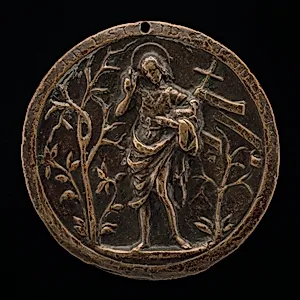
Saint John the Baptist
c. 1500
Medium
bronze//Medium brown patina
Dimensions
overall (diameter): 5.9 cm (2 5/16 in.) gross weight: 49 gr
Classification
Sculpture
Department
CSD
Museum
National Gallery of Art, Washington, D.C.
Credit
Samuel H. Kress Collection
Accession Number
1957.14.407
Rights
Public Domain
Art Historical Context
This delicate bronze relief of Saint John the Baptist, created in northern Italy around 1500, captures the saint in a moment of quiet contemplation. Measuring just under six centimeters in diameter, the small circular form suggests it may have served as a devotional medallion or plaquette, easily carried or displayed in a private setting. The medium-brown patina that now graces its surface speaks to centuries of handling and appreciation, highlighting the enduring appeal of bronze as a material that ages gracefully while preserving fine details. During the early Renaissance, northern Italian artists excelled at casting small-scale works in bronze, drawing on both classical models and Christian iconography. Saint John, often shown with his attribute of a lamb or in a wilderness setting, was a popular subject symbolizing spiritual preparation and renewal. Such intimate objects allowed patrons to keep sacred images close at hand, blending personal piety with the period’s growing interest in refined metalwork. The piece’s modest size belies the technical skill required to model its subtle forms in relief. Cast in bronze—a medium prized for its durability and capacity to capture intricate textures—this work reflects the Renaissance fascination with portable art that merged devotional purpose with aesthetic refinement. Today it offers visitors a tangible connection to the intimate spiritual practices of sixteenth-century Italy.