
Saint Nicholas
Unknown Artist
1340–50
Medium
Pot-metal glass, colorless glass, and vitreous paint
Dimensions
35 x 13 in. (88.9 x 33 cm) with modern border: 35 7/8 × 19 × 5/8 in. (91.1 × 48.3 × 1.6 cm)
Classification
Glass-Stained
Culture
Austrian
Department
The Cloisters
Museum
Metropolitan Museum of Art, New York, NY
Credit
The Cloisters Collection, 1965
Accession Number
65.97.5
Rights
Public Domain
Tags
Art Historical Context
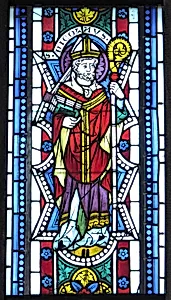
This exquisite stained-glass panel, titled *Saint Nicholas*, hails from Austria around 1340–50 and captures the revered bishop saint in a classic medieval pose, clad in episcopal robes and holding a crozier, the staff symbolizing his authority.ed from vibrant pot-metal glass—where metal oxides create rich, translucent colors—combined with colorless glass and detailed vitreous paint for facial features and folds, it exemplifies the technical mastery of Gothic-era glassmakers. Now housed in The Cloisters at the Metropolitan Museum of Art (The Cloisters Collection, 1965), its original 35 x 13 in. (88.9 x 33 cm) panel glows with the jewel-like intensity intended for church windows. In the 14th century, such panels illuminated cathedrals, teaching biblical and saintly stories to worshippers through light and color, a divine interplay central to medieval devotion. Austrian stained glass from this period often featured bold figures against simple grounds, prioritizing narrative clarity over elaborate backgrounds. Saint Nicholas, patron of children and sailors, embodies charitable miracles, making this artwork a window into late medieval piety and craftsmanship. Though the artist remains unknown, its survival offers a rare glimpse into Alpine religious art, preserved for modern visitors to ponder its timeless spiritual radiance.