
Saint Romuald
possibly ca. 1320–30
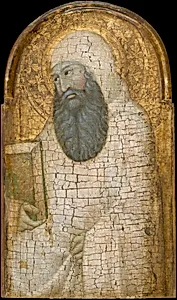
Medium
Tempera on wood, gold ground
Dimensions
Overall, with engaged frame, 18 1/8 x 10 3/4 in. (46 x 27.3 cm)
Classification
Paintings
Department
European Paintings
Museum
Metropolitan Museum of Art, New York, NY
Credit
The Jack and Belle Linsky Collection, 1982
Accession Number
1982.60.1
Rights
Public Domain
Tags
Art Historical Context
Behold *Saint Romuald*, delicate tempera painting on wood with a shimmering gold ground, created around 1320–30 by the enigmatic Pseudo-Palmeruccio. small panel, measuring just 18⅛ × 10¾ inches, captures the 11th-century Italian monk founder of the Camald order in a moment of quiet devotion. Often depicted with books symbolizing his scholarly reforms and eremitic life, Saint Romuald here embodies the spiritual fervor of medieval Christianity, inviting viewers to contemplate solitude and piety. Attributed to Pseudo-Palmeruccio—a pseudonym for an artist linked to early Sienese traditions—this work exemplifies the Trecento style of Italian panel painting. The gold ground, meticulously applied over gesso, creates a heavenly glow, enhancing the saint's ethereal presence and drawing the eye to his serene expression and monastic robes. Tempera, a durable egg-based medium, allowed for fine details in folds and inscriptions, typical of devotional images used in private prayer or altarpieces. Housed in the Metropolitan Museum of Art as part of The Jack and Belle Linsky Collection (1982), this piece offers a window into 14th-century Tuscan artistry, bridging Gothic elegance with emerging Renaissance naturalism. Its intimate scale made it perfect for personal meditation, reminding us of art's role in nurturing faith amid turbulent times.