
Saint Ursula
1551 to 1600
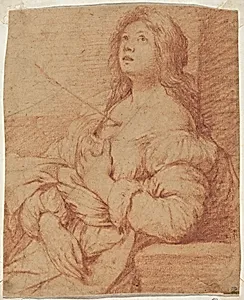
Medium
red chalk on beige oatmeal paper
Dimensions
Overall (irregular): 22 x 16.5 cm (8 11/16 x 6 1/2 in.) mount: 25.9 x 19.5 cm (10 3/16 x 7 11/16 in.)
Classification
Drawing
Department
CG-E
Museum
National Gallery of Art, Washington, D.C.
Credit
William B. O'Neal Fund
Accession Number
1998.28.2
Rights
Public Domain
Art Historical Context
Behold *Saint Ursula*, a delicate red chalk drawing on beige oatmeal paper by the Genoese Baroque master Bernardo Strozzi (1581–1644). between 1551 and 1600, this intimate study measures just 22 x 16.5 cm, capturing the saint—legendary leader of 11,000 martyrs—in a moment of quiet devotion. Housed in the National Gallery of Art Department of Drawings (CG-E), it was acquired through the William B. ONeal Fund, exemplifying Strozzi's in translating his vibrant oil paintings into fluid sketches. Red chalk, prized during the late Renaissance and Baroque eras for its warm, fleshy tones, allowed Strozzi to model Ursula's face and drapery with remarkable softness and realism. This medium was ideal for preparatory studies, bridging the gap between artist's imagination and finished altarpieces. Strozzi's loose, expressive linework reflects the dramatic tenebrism and emotional intensity of his Baroque style, influenced by Caravaggio and his Genoese contemporaries. Saint Ursula's cult flourished in Counter-Reformation Europe, symbolizing purity and faith amid religious strife. This drawing invites visitors to appreciate the humility of process behind grand religious art, revealing Strozzi's mastery in evoking sanctity through simple chalk strokes.
About the Artist
Bernardo Strozzi · 1581–1644
Strozzi was one of the most influential painters in Italy during the early 17th century, particularly in Genoa and Venice. His powerful and painterly religious works, genre scenes, and portraits are distinguished by their rich, glowing color and broad, energetic brushstrokes. Comment on works: Still Life; Religious; Portraits